
The year 2022 saw the Reserve Bank of India (RBI) start acting on the policy repo rate after a gap of two years. The six-member monetary policy committee of the RBI reduced interest rate sharply - by 115 bps - when Covid-19 struck in 2020. In March 2020, days after the nationwide lockdown was announced, MPC in an unscheduled meeting reduced the repo rate by 75 bps, followed by another 40 bps in May. Status quo was maintained for the next two years since the May repo rate hike.

The economy is gaining traction with gradual pick up in manufacturing activity and moderation in contraction of services, spurred by comfortable liquidity conditions, an RBI article on Tuesday said. Observing that the retreat of the second wave of coronavirus pandemic has been slow, the RBI in an article on the 'State of Economy' said, the aggregate demand conditions are buoyed by the release of pent-up demand post unlock, while the supply situation is improving with the monsoon catching up to its normal levels and sowing activity gaining pace. "Reaffirming the traction that the economy is gaining, the manufacturing activity is gradually turning around, while contraction in services has moderated.

A Kotak research report expects RBI to cuts rates by 50 basis points in the first half of 2019. RBI will announce its sixth bi-monthly monetary policy on February 7.

Patra, as executive director of the central bank, was the principal advisor to the Monetary Policy Department since July 2012.
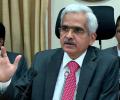
All-out efforts are needed to mitigate the adverse impact of the Covid-19 pandemic, and the RBI will use any instrument necessary to revive growth and preserve financial stability, according to the minutes of the central bank's policy meeting.

The repo rate, at which the central bank lends to the system, will come down to 5.75 per cent after the cut.
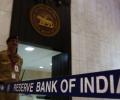
The SBI report ruled out a October rate hike

The Reserve Bank of India (RBI) on Wednesday announced to increase the policy repo rate by 50 basis points to 4.9 per cent, the second hike in five weeks aimed at quelling the inflation. The MPC vote was unanimous and has decided to keep stance withdrawal from accommodative, RBI Governor Shaktikanta Das said in a press conference on Wednesday. The decision was taken during a three-day meeting of the RBI's Monetary Policy Committee (MPC) to review the interest rates in the country. The MPC voted unanimously to increase the policy repo rate by 50 bps to 4.90 per cent," Das said.
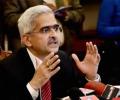
Heightened geopolitical uncertainties will lead the Reserve Bank's rate-setting panel to opt for a status quo at the next week's meeting, Axis Bank's chief economist Saugata Bhattacharya said on Monday. Bhattacharya said he had earlier expected a tightening action at the policy meet scheduled for April 6-8 but the increased uncertainties on the geopolitical front due to the Russian invasion of Ukraine and its impact on commodity prices makes him now think that RBI will defer such an action. He said the central bank's Monetary Policy Committee (MPC) may hike rates in the second half of FY23 by up to 0.50 per cent.
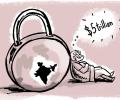
India is much better placed today to deal with future waves of the pandemic relative to the first wave, RBI deputy governor Michael Patra said.

This is the fifth straight cut in rates by the Reserve Bank of India in as much policy reviews in 2019, and takes the total quantum of reductions to 1.35 per cent.
The Reserve Bank of India on Friday decided to leave benchmark interest rate unchanged at 4 per cent but maintained an accommodative stance as the economy faces heat of the second Covid wave.
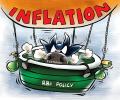
"We have to stand in readiness to go beyond keeping Arjuna's eye to deploying policy instruments, if necessary" to contain inflation, said Reserve Bank Governor Shaktikanta Das on Thursday. Headline consumer price index-based inflation projection for the second quarter of 2023-24 has been revised up substantially, primarily due to the price shock from vegetables, at 6.2 per cent by the RBI form 5.2 per cent estimated in June. Unveiling the bi-monthly monetary policy, Governor Das said the moderation in headline inflation to 4.6 per cent in the first quarter of 2023-24 was in line with the projections set out in the June MPC meeting.

Urjit Patel panel wanted all members to be appointed by RBI

'The no-rate cut policy and preference to wait for the Budget and clarity on the fiscal front demonstrate RBI Governor Shaktikanta Das is maturing in his new role,' notes Tamal Bandyopadhyay.

Observing that there is liquidity overhand of Rs 13 lakh crore in the system, RBI Governor Shaktikanta Das said on Friday that the exceptional measures undertaken during pandemic will be dealt in sync with macroeconomic developments to preserve financial stability. Since the onset of the pandemic, the Reserve Bank has maintained ample surplus liquidity to support a speedy and durable economic recovery, he said while announcing the outcome of the Monetary Policy Committee (MPC) meeting. The level of surplus liquidity in the banking system increased further during September 2021, with absorption under fixed rate reverse repo, variable rate reverse repo (VRRR) of 14 days and fine-tuning operations under the liquidity adjustment facility (LAF) averaging Rs 9 lakh crore per day as against Rs 7 lakh crore during June to August 2021, he said.

'The real repo rate is very high in terms of core inflation.'
The Reserve Bank of India on Friday raised the benchmark lending rate by 50 basis points to 5.40 per cent to tame inflation.

The paper seems to be suggesting strongly that the tight target range be maintained even as the central bank is all set to miss the target range for three consecutive quarters because of the Covid crisis.

The Governor said the MPC had voted to maintain its accommodative stance, implying more rate cuts in the future if the need arises.

Retail inflation crossed the RBI's comfort level and rose to 5.21 per cent in December on increase in prices of food items.
India decisively withstood global headwinds in 2023 and is likely to remain as the world's fastest-growing major economy on the back of growing demand, moderate inflation, stable interest rate regime and robust foreign exchange reserves. Despite widespread pessimism witnessed among the developed nations and the worsening geopolitical situation, India recorded a gross domestic product (GDP) expansion of 6.1 per cent in the March quarter. The growth moved up to 7.8 per cent in the June quarter and was 7.6 per cent in the September quarter. For the first six months of this fiscal, the growth was 7.7 per cent.

As he projected a grim outlook for the economy, RBI Governor said that amidst this encircling gloom, agriculture and allied activities have provided a beacon of hope on the back of an increase of 3.7 per cent in foodgrains production to a new record.

Despite admitting to price pressures both from food items and input prices, RBI Governor Shaktikanta Das on Wednesday hoped that a normal Southwest monsoon will have a "soothing impact" on inflation pressures and ruled out any wide variations in medium-term inflation forecast from what was given in April. In an unscheduled address earlier in the day amidst the raging pandemic, Das said the overall outlook for the economy is highly uncertain and is clouded with downside risks. He offered a slew of relief and liquidity measures to individuals and small businesses apart from a Rs 50,000 crore special liquidity window to the healthcare sector.

Retail inflation declined to a three-month low of 5.1 per cent in January, mainly due to subdued prices of vegetables, fruits and other food items, according to government data released on Monday. The fall indicates that retail inflation is inching towards the Reserve Bank's comfort level of 4 per cent. The Consumer Price Index (CPI) based inflation was on the rise for two straight months after touching a trough of 4.9 per cent in October 2023. In December, it stood at 5.69 per cent.

The Reserve Bank on Friday projected retail inflation to be in 5-5.2 per cent range during the first half of the next fiscal year, expecting further softening of vegetables prices in near term. Also, it has lowered the retail inflation forecast for the current January-March quarter of 2020-21 fiscal at 5.2 per cent. The Reserve Bank (RBI) has kept the key policy rate unchanged at 4 per cent, with an accommodative stance, so as to ensure that inflation remains well within the target, Governor Shaktikanta Das said while announcing the last monetary policy of 2020-21.

The central bank and Indian government has reached a "broad consensus" on the composition of a rate-setting panel.

Nestle India was the top laggard in the Sensex pack, shedding around 2 per cent, followed by SBI, HDFC Bank, Axis Bank, ICICI Bank, Reliance Industries, HUL and Dr Reddy's. NSE Nifty slipped 20.10 points to 15,670.25.
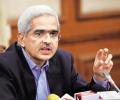
A staunch defender of demonetisation, it would be interesting to see how he handles the government's increasing demand for more cash from the RBI, and letting some weak banks get out of prompt corrective action.

The Urjit Patel committee on monetary policy framework has proposed setting up of a monetary policy committee (MPC) that will be headed by the Reserve Bank of India (RBI) governor and accountable for achieving inflation target set by it.

The statement, issued after the 2-day meeting of the 6-member Monetary Policy Committee of the Reserve Bank of India, also said that recapitalisation of public sector banks along with resolution of stressed assets under the Insolvency and Bankruptcy Code (IBC) will create demand for fresh investments.
Lower inflation, FCNR(B) outflows likely to influence central bank decision
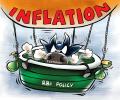
Analysts say RBI will cut rates because the liquidity crunch that began this time last year is still hurting the economy and also with an eye on the August industrial production numbers, which showed a contraction by 1.1 per cent -- the steepest in seven long years.
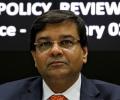
Market participants must appreciate that staying cautious is a virtue for central bankers and should not expect a sudden reversal in the formal monetary policy stance.

Fitch Solutions sees RBI keeping benchmark interest rates unchanged during the fiscal to March 2022 following its decision to buy Rs 1 lakh crore of government bonds. "We had initially expected another policy rate cut to arrest the rise in government bond yields since the Union Budget announcement in February. "However, having an explicit bond purchase guidance from the RBI following the announcement of the G-SAP will also achieve a similar effect, if not even be more effective than a rate cut on capping the increase in bond yields," it said in a note. The Reserve Bank of India (RBI) held its policy repurchase (repo) rate unchanged at 4 per cent at its monetary policy meeting on April 7.
Retail inflation fell to a 15-month low of 5.66 per cent in March, mainly due to a decline in food prices, government data showed on Wednesday. The inflation figure in March is within the RBI's comfort zone as it is below 6 per cent. The retail inflation based on Consumer Price Index (CPI) was 6.44 per cent in February 2023 and 6.95 per cent in the year-ago period.

'If there is an RBI majority in the committee, there is no question of a veto.'

The services sector growth in India fell to a one-year low in November on softer expansions in new work intakes and output, despite receding price pressures, a monthly survey said on Tuesday. The seasonally adjusted S&P Global India Services Business Activity Index fell from 58.4 in October to a one-year low of 56.9 in November. Despite witnessing a month-on-month decline, the rate of expansion was stronger than its long-run average.

Here are the key decisions announced by the Reserve Bank of India on Thursday.

Achieving inflation target of 4 per cent, recovery after remonetisation and hardening profile of oil prices are some of the risks which the RBI is watching closely, says Gaurav Kapur.
 © 2026 Rediff.com - Advertise with us - Disclaimer - Privacy Policy - Sitemap - Feedback - About us - Terms of use - Grievances